


We bought a new home in the summer of 2022 and immediately discovered a few unexpected faults with items in the house.
One was the double oven.
The large bottom oven worked fine, but the heat distribution was slightly off. The smaller top oven didn't work at all.
It was an inconvenience.
On days when we were just cooking five jacket potatoes, we were heating a much larger oven than necessary. And, when we were doing a Sunday roast dinner, we had to cram everything into that one oven when it would have been easier to spread them over two.
What did we do with that inconvenience?
Nothing.
It was a problem that was easy enough to live with.
Until Christmas.
Christmas dinner for twelve with one functioning oven was a disaster.
The potatoes were undercooked, the stuffing burnt, and the meal was 1hr30 overdue.
Throughout most of the day, my wife and I were stressed, on edge, and ready to overreact to any innocuous comment made by guests.
The oven inconvenience had escalated to frustration.
But come Boxing Day, it reverted back to being an inconvenience that we were happy to ignore, so we did.
Until September the following year when the supermarket sent a reminder to order a turkey in time for Christmas.
Planning Christmas dinner, memories of the previous year's stress came flooding back.
We didn't want to experience that frustration, so we ordered a new oven at the same time we ordered the Christmas food.
Buyers ignore inconveniences, but they always respond to frustrations
Inconveniences sit on endless to-do lists. Frustrations demand immediate attention.
And one person's inconvenience is another person's frustration.
A family that spends all its time baking would have experienced the malfunctioning oven as a frustration immediately and done something to solve it there and then.
For us, it became a frustration when triggered by an event (Christmas), but we still didn't do anything to solve the problem until the recurring event approached next year.
At its foundations, effective marketing recognizes a true frustration as experienced by a specific market, articulates the circumstances and emotions associated with that frustration (in the buyer's words), and presents compelling proof of a solution.
Check out the visual below as an example:
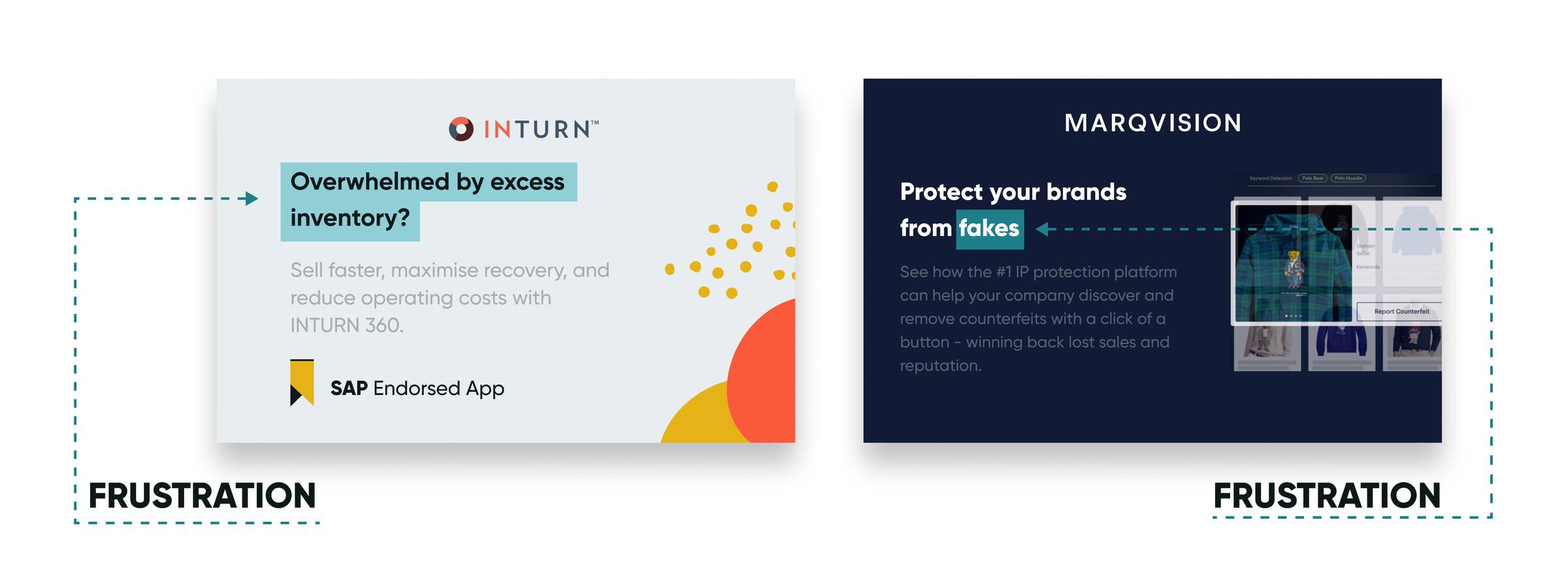
These headlines are effective because they speak directly to people experiencing active frustrations, not merely inconveniences.
For me, the problem with the oven never changed. What changed was my relationship with the problem.
We each have an unlimited number of inconvenient problems to deal with on our to-do list.
We'll rarely spend time or money solving a single one.
On the other hand, our list of frustrations is limited and fluid. We only have so much mental bandwidth to consider and pay attention to these problems that eat away at us. That's true in our work and personal lives.
The oven dropped onto the list, then quickly dropped out, then came back in.
I'm an easy sell for an oven manufacturer when they're on the frustration list and an almost impossible sell when on the inconvenience list.
"Copy cannot create desire for a product. It can only take the hopes, dreams, fears, and desires that already exist in the hearts of millions of people, and focus those already-existing desires onto a particular product. This is the copywriter's task: not to create this mass desire - but to channel and direct it." Eugene Schwartz, Breakthrough Advertising
The ultimate goal of marketing is placing your solution in front of the prospect the moment the inconvenience becomes a frustration. With content marketing, the goal is to get there ahead of time so that, when they're ready, they already trust us and our solution.
An average product that targets true frustration will outperform a superior product that addresses a mere inconvenience, every time.