


Ten years ago, Anthony Barry was coming to the end of his football career, all of which was spent in the lower leagues at clubs like Accrington Stanley. They have an average attendance of around 2,500, and the year Barry retired were the 81st ranked team in England.
As I write this, Barry is the assistant manager for the England national team entering the 2026 World Cup. That follows coaching roles at Chelsea, Bayern Munich, Republic of Ireland, Belgium, and Portugal.
How did he pull off that kind of trajectory?
He retired from playing at 30, which is younger than most players. He’d dislocated his patella aged 24, and fearing his football career would come to an early end, started taking his coaching badges. When he retired, unlike higher profile players, he was fully qualified to coach.
His first coaching role was part-time, aged 29, with the Accrington Stanley Under 16s. After retiring from playing, he got a full-time role at Wigan, then in the third tier of English football.
Whilst at Wigan, he studied for two years to get his UEFA Pro Licence. This is the highest football coaching qualification in Europe.
At the end of that course, the student is required to deliver a dissertation project. Barry focused on throw-ins, which was an overlooked detail of the game. He analysed 17,000 throw-ins over a full Premier League season and uncovered what would become game-changing findings on the role of throw-ins and how to approach them as an offensive set piece weapon.
Frank Lampard was on the same course with Barry.
Lampard is a legend of English football. A Premier League and Champions League winner, record goalscorer for Chelsea, with 106 caps for England. He’d retired from playing and started managing in 2018.
During the two years of their studies, Lampard and Barry had barely spoken a word to each other.
But after course completion, and to the complete surprise of Barry, Lampard called to tell him how much he appreciated his work and thinking. They began texting back and forth over the coming months. Barry had been coaching at Wigan for 3 years, now in the second tier of English football, but the club was entering financial challenges and going into administration.
Lampard, who was now manager at Chelsea, offered Barry a coaching role, which Barry accepted. This was a huge step up. Chelsea were a team regularly competing in the Champions League.
Six months later, Chelsea sack Lampard. Usually, when a manager is sacked by a club, his coaching staff head out the door with him. But based on what they’d seen of this work, Chelsea asked Barry to stay.
His new manager, Thomas Tuchel, arrives from Germany and in the same season, Chelsea win the Champions League; the biggest club competition in the world.
As happens in the football merry-go-round, Tuchel was sacked by Chelsea a year later. When he gets his next job as manager of Bayern Munich, one of the biggest clubs in the world, in his public unveiling to the press, he tells journalists, “We're hoping to add Anthony Barry [to the coaching staff], who is currently at Chelsea.”
Barry moved to Munich as a specialist assistant in set pieces after the club paid Chelsea £1 million in compensation to release him from his contract. That was a huge fee for a non-playing, non-managerial role.
After Tuchel left Munich, his next job was managing the England national team where he immediately hired Barry as his assistant coach.
That’s a 10-year trajectory from Accrington Stanley U16s to the World Cup with England.
Get Lucky
Luck is determined by two sets of events. Those you can control and those you cannot.
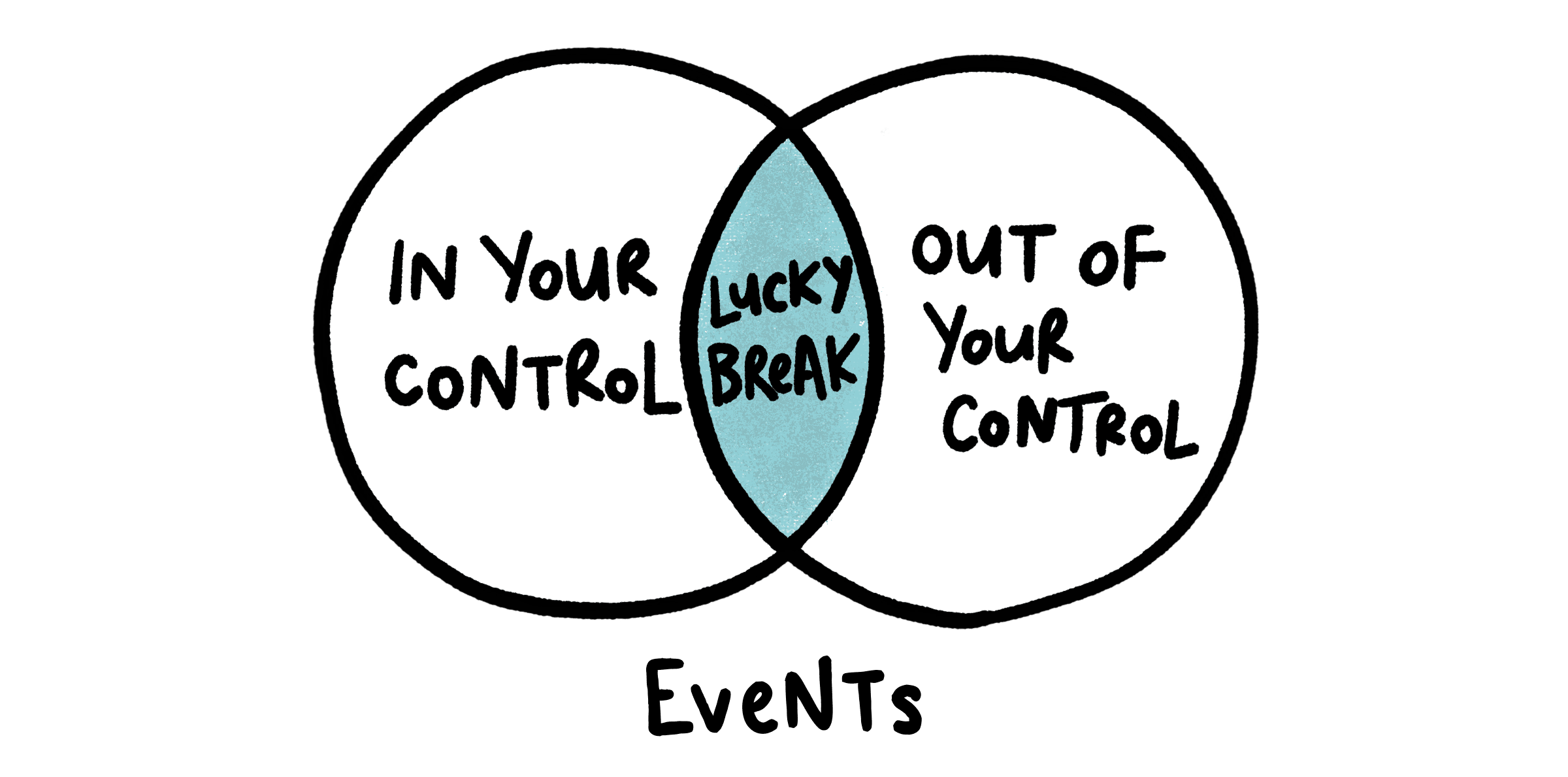
Lampard completing the Pro License course at the same time as Barry was an uncontrollable event. Lampard being fully present during Barry’s presentation of throw-ins findings was an uncontrollable event. Same with the fact that Lampard was manager of Chelsea at the time.
Barry starting his coaching badges at the age of 24, successfully helping Wigan to promotion during his three years there, and studying 17,000 throw-ins were all controllable events.
Every authority I’ve interviewed has a Frank Lampard moment.
Marty Neumeier got his first book deal because a publisher was in the audience for one of his talks.
Roger L. Martin got the opportunity to be the Dean at Rotman Business School because the President of Toronto University sat on his client’s board.
Dorie Clark got the opportunity to write for HBR because she sold her bike to a writer there.
But leading up to the uncontrollable event, each authority worked tirelessly on the controllable events required to catch those lucky breaks.
They obsessed over their craft for years, delivered results clients loved, and started sharing their expertise through writing and speaking.
Barry studied 17,000 throw-ins, developed insights from those observations, and applied them to his work.
The game is to do the work that expands your luck surface area.
That means:
- Working on your craft when nobody is watching.
- Consistently writing and publishing about your craft.
- Speaking on stages (literal and metaphorical) that share the attention with ‘your’ people.
You can’t control how and when the uncontrollable moments of luck arrive, but you can control the behaviours and habits that place you in a position to attract those lucky breaks when they appear.